



👋 Hey friend,
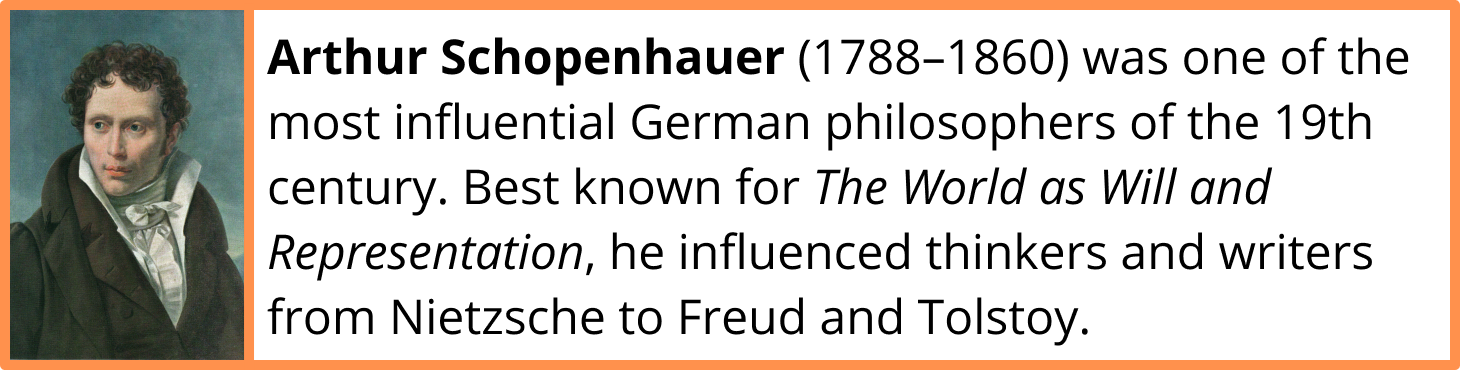
This Friday morning I’ve been re-reading my Kindle highlights from The Wisdom of Life, written in 1851 by the German philosopher Arthur Schopenhauer.
The book is almost 175 years old, yet what Schopenhauer says about the human condition feels as true and applicable as ever. In this letter I share one of my favorite passages.
People call him [Schopenhauer] a pessimist. I don’t think that’s entirely fair. I think his worldview could be interpreted as pessimistic, but I just read him when I want to read a harsh dose of truth.
— Naval Ravikant (blog post “In the Arena”)
👤 Doers
💡Nugget
🟠 Arthur Schopenhauer:
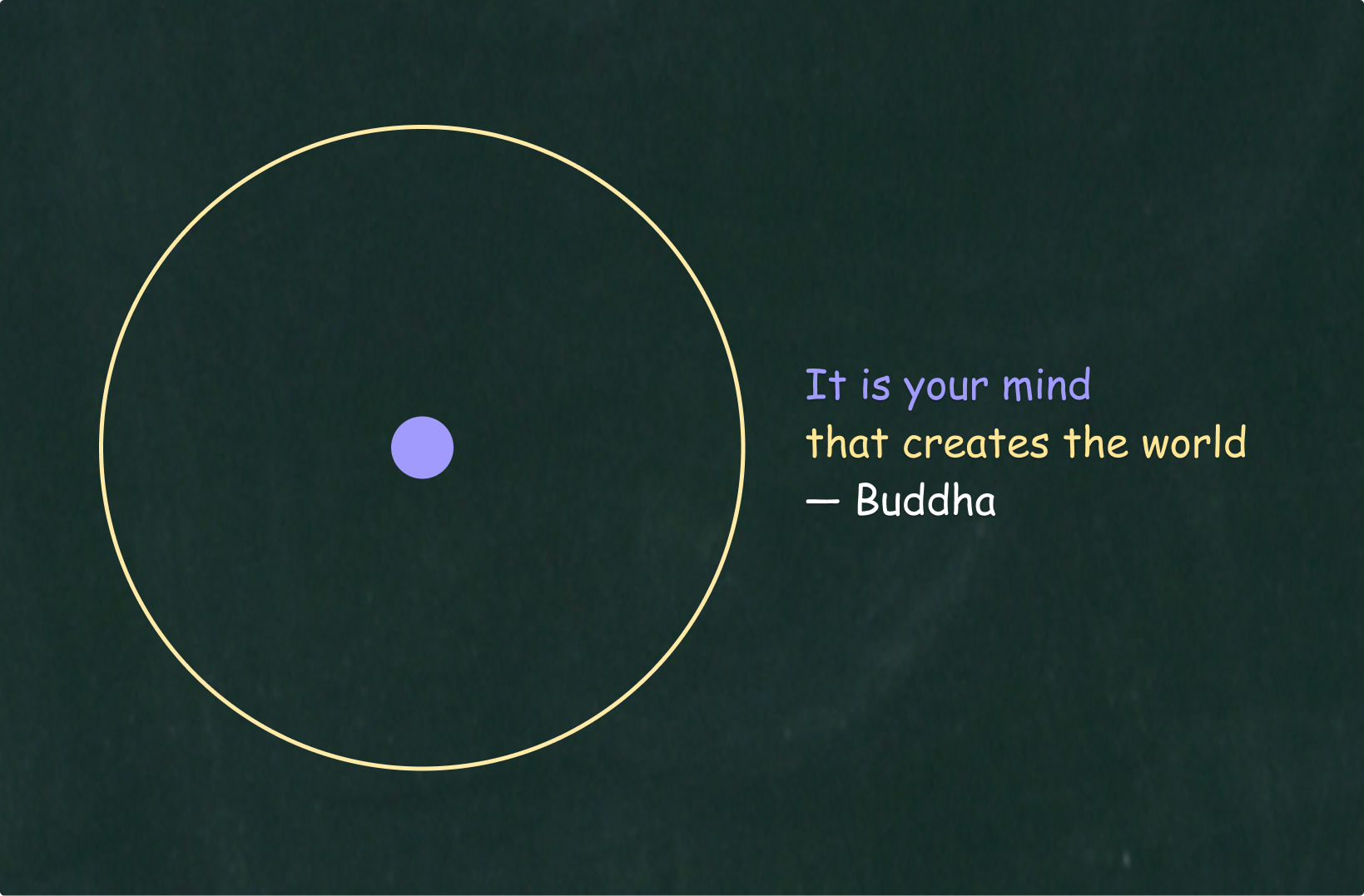
Compared with genuine personal advantages, such as a great mind or a great heart, all the privileges of rank or birth, even of royal birth, are but as kings on the stage, to kings in real life. The same thing was said long ago by Metrodorus, the earliest disciple of Epicurus, who wrote as the title of one of his chapters, The happiness we receive from ourselves is greater than that which we obtain from our surroundings. And it is an obvious fact, which cannot be called in question, that the principal element in a man’s well-being — indeed, in the whole tenor of his existence — is what he is made of, his inner constitution. For this is the immediate source of that inward satisfaction or dissatisfaction resulting from the sum total of his sensations, desires and thoughts; whilst his surroundings, on the other hand, exert only a mediate or indirect influence upon him. This is why the same external events or circumstances affect no two people alike; even with perfectly similar surroundings every one lives in a world of his own. For a man has immediate apprehension only of his own ideas, feelings and volitions; the outer world can influence him only in so far as it brings these to life.
On hearing of the interesting events which have happened in the course of a man’s experience, many people will wish that similar things had happened in their lives too, completely forgetting that they should be envious rather of the mental aptitude which lent those events the significance they possess when he describes them; to a man of genius they were interesting adventures; but to the dull perceptions of an ordinary individual they would have been stale, everyday occurrences. This is in the highest degree the case with many of Goethe’s and Byron’s poems, which are obviously founded upon actual facts; where it is open to a foolish reader to envy the poet because so many delightful things happened to him, instead of envying that mighty power of phantasy which was capable of turning a fairly common experience into something so great and beautiful.
…
It is clear, then, that our happiness depends in a great degree upon what we are, upon our individuality, whilst lot or destiny is generally taken to mean only what we have, or our reputation. Our lot, in this sense, may improve; but we do not ask much of it if we are inwardly rich: on the other hand, a fool remains a fool, a dull blockhead, to his last hour, even though he were surrounded by houris in paradise. This is why Goethe, in the West-östliclien Divan, says that every man, whether he occupies a low position in life, or emerges as its victor, testifies to personality as the greatest factor in happiness…
Everything confirms the fact that the subjective element in life is incomparably more important for our happiness and pleasure than the objective, from such sayings as Hunger is the best sauce, and Youth and Age cannot live together, up to the life of the Genius and the Saint. Health outweighs all other blessings so much that one may really say that a healthy beggar is happier than an ailing king.
A quiet and cheerful temperament, happy in the enjoyment of a perfectly sound physique, an intellect clear, lively, penetrating and seeing things as they are, a moderate and gentle will, and therefore a good conscience — these are privileges which no rank or wealth can make up for or replace. For what a man is in himself, what accompanies him when he is alone, what no one can give or take away, is obviously more essential to him than everything he has in the way of possessions, or even what he may be in the eyes of the world. An intellectual man in complete solitude has excellent entertainment in his own thoughts and fancies, while no amount of diversity or social pleasure, theatres, excursions and amusements, can ward off boredom from a dullard. A good, temperate, gentle character can be happy in needy circumstances, whilst a covetous, envious and malicious man, even if he be the richest in the world, goes miserable.
Book: The Wisdom of Life
When I read “An intellectual man in complete solitude has excellent entertainment in his own thoughts and fancies…”, it reminded me this passage from Viktor Frankl’s Man’s Search for Meaning:
“In spite of all the enforced physical and mental primitiveness of the life in a concentration camp, it was possible for spiritual life to deepen. Sensitive people who were used to a rich intellectual life may have suffered much pain (they were often of a delicate constitution), but the damage to their inner selves was less. They were able to retreat from their terrible surroundings to a life of inner riches and spiritual freedom. Only in this way can one explain the apparent paradox that some prisoners of a less hardy make-up often seemed to survive camp life better than did those of a robust nature.”

💥 Stuff I Loved



I hope you enjoyed today’s letter!
Talk you soon,
Your nuggets friend Julio :)