


👋 Hey friend,
🎉 Happy New Year!!
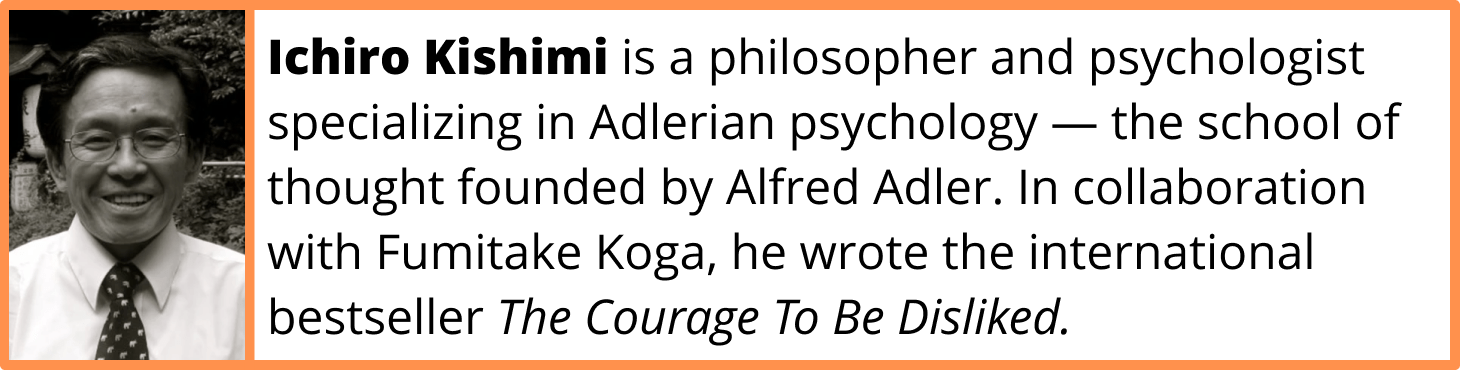
A few weeks ago I decided to read the book The Courage To Be Disliked, written by Ichiro Kishimi and Fumitake Koga, and I’m absolutely loving it! (I’m currently halfway through the book — I’m a super slow reader 😂 ).
I decided to read it after seeing it recommended by two of my favorite entrepreneurs: Derek Sivers and Andrew Wilkinson…
“Wow. A profound little philosophy book from Japan, communicating the psychology of Alfred Adler - a rival of Freud. Told as a conversation between an angry student and a patient teacher. A little book so good that I rushed home from other activities to keep reading it, and finished in a day. A surprisingly fresh perspective on how to live. (The “disliked” part is not the point, so don’t let the title distract you.)”
- Derek Sivers (from his notes on the book The Courage To Be Disliked)
“… I was slowly drifting towards becoming what I'd always mocked. A corporate politician. A beige person. Human vanilla extract.
Then, in January, I came across a book called The Courage to Be Disliked.
I needed this book. So much that I actually felt personally attacked by it…”
- Andrew Wilkinson (from his tweet “I want you to hate me…”)
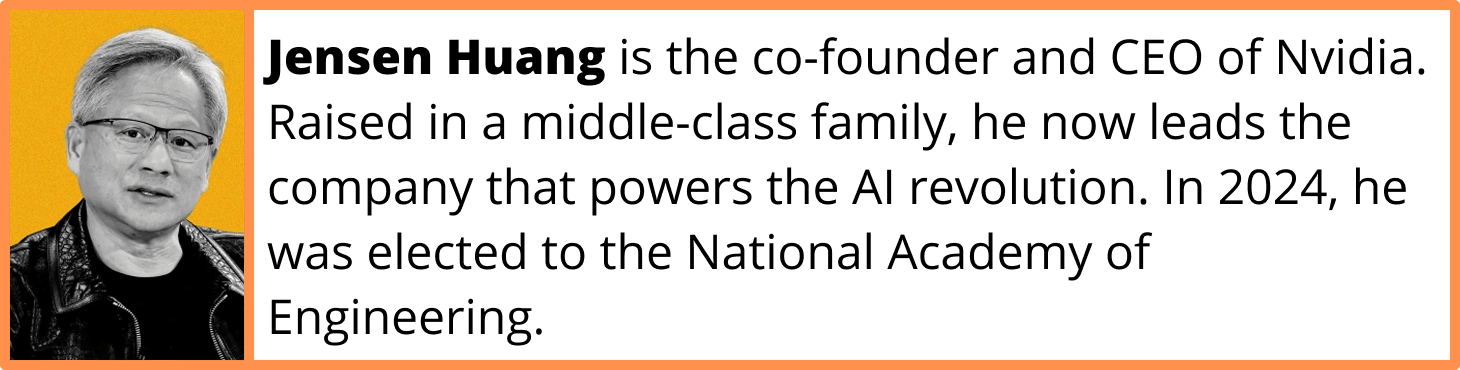
There’s a part in the book where the author talks about having feelings of inferiority — and how that’s actually healthy and beneficial for personal growth. And in this part I immediately recalled a line from the book The Nvidia Way — where I thought Jensen Huang [founder of Nvidia] is a perfect illustration.
So in today’s letter, I want to share with you that line from the book The Nvidia Way. And then I’ll add the explanation from the book The Courage To Be Disliked.
The idea is absolutely life-changing, and I knew instantly that I was gonna share it in the newsletter :)
👤 Doers
💡Nugget
🟠 Tae Kim (author of the book The Nvidia Way):
Jensen [Huang] has a habit of self-criticism.
[Anthony Mederios, an executive at Nvidia, tells this story]:
“I’ll never forget this. We had done fantastic. We just blew the doors off the quarter. Jensen stood up in front of us and said:
I look in the mirror every morning and say: You Suck.”
Medeiros was struck by how someone so manifestly successful could still think in such terms.
👉 Book: The Nvidia Way, written by Tae Kim
Now the insightful idea from the book The Courage To Be Disliked...🟠 Ichiro Kishimi:
PHILOSOPHER: [Alfred] Adler recognises that feelings of inferiority are something everyone has. There’s nothing bad about feelings of inferiority themselves.
YOUTH: So, why do people have them in the first place?
PHILOSOPHER: It’s probably necessary to understand this in a certain order. First of all, people enter this world as helpless beings. And people have the universal desire to escape from that helpless state. Adler called this the ‘pursuit of superiority’.
YOUTH: Pursuit of superiority?
PHILOSOPHER: This is something you could think of as simply ‘hoping to improve’ or ‘pursuing an ideal state’. For instance, a toddler learns to steady himself on both legs. He has the universal desire to learn language and to improve. And all the advancements of science throughout human history are due to this ‘pursuit of superiority’, too.
YOUTH: Okay. And then?
PHILOSOPHER: The counterpart of this is the feeling of inferiority. Everyone is in this ‘condition of wanting to improve’ that is the pursuit of superiority. One holds up various ideals or goals, and heads toward them. However, on not being able to reach one’s ideals, one harbours a sense of being lesser. For instance, there are chefs who, the more inspired and accomplished they become, are forever beset with the sort of feeling of inferiority that makes them say to themselves, I’m still not good enough, or I’ve got to bring my cooking to the next level, and that sort of thing.
YOUTH: That’s true.
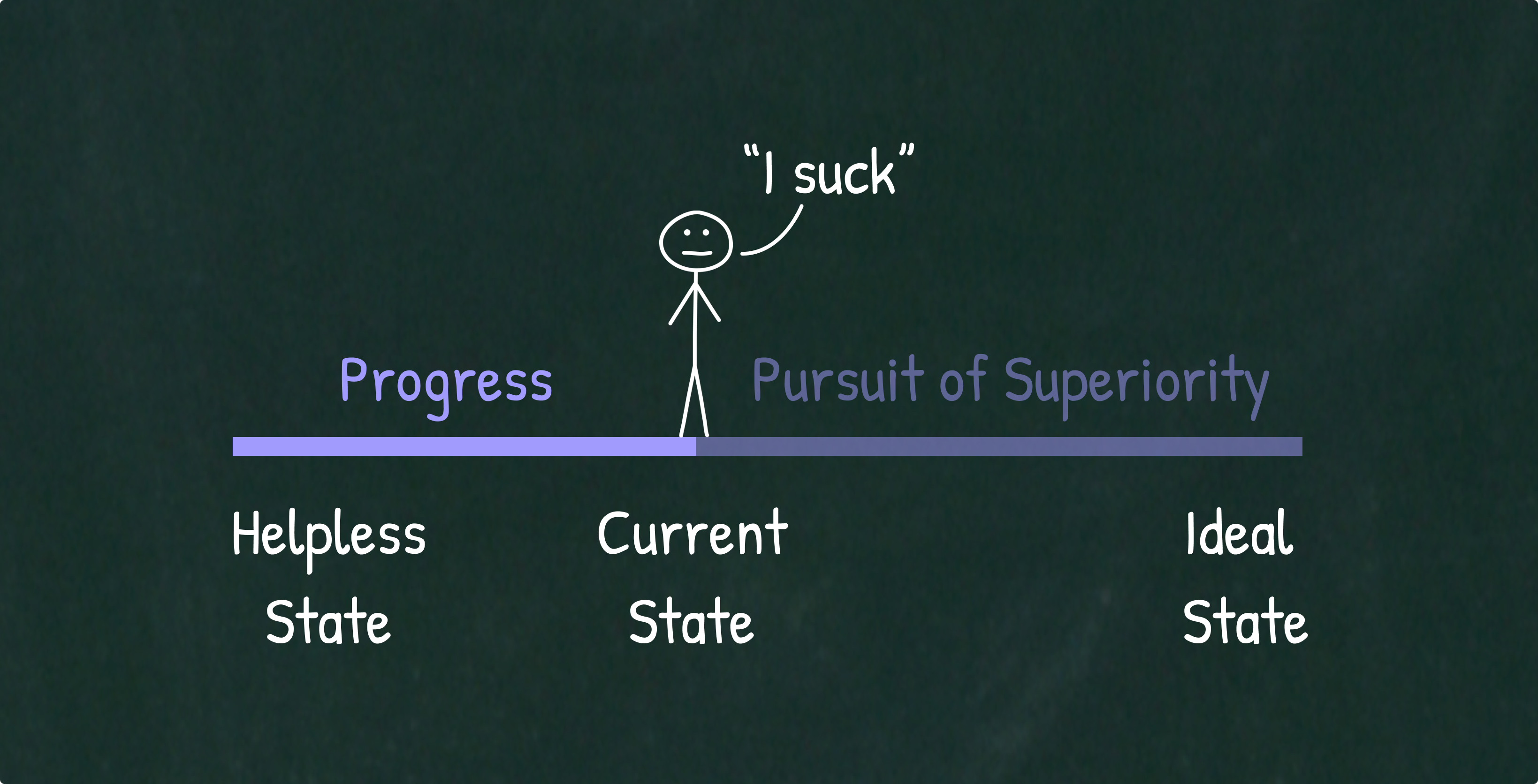
PHILOSOPHER: Adler is saying that the pursuit of superiority and the feeling of inferiority are not diseases, but stimulants to normal, healthy striving and growth. If it is not used in the wrong way, the feeling of inferiority, too, can promote striving and growth.
YOUTH: The feeling of inferiority is a kind of launch pad?
PHILOSOPHER: That’s right. One tries to get rid of one’s feeling of inferiority, and keep moving forward. One’s never satisfied with one’s present situation—even if it’s just a single step, one wants to make progress. One wants to be happier. There is absolutely nothing wrong with the state of this kind of feeling of inferiority. There are, however, people who lose the courage to take a single step forward, and who cannot accept the fact that the situation can be changed by making realistic efforts. People who, before even doing anything, simply give up and say things like, ‘I’m not good enough anyway,’ or ‘Even if I tried, I wouldn’t stand a chance.’
👉 Book: The Courage To Be Disliked, written by Ichiro Kishimi and Fumitake Koga
The lesson I took from this idea is that while everyone has feelings of inferiority, not everyone attributes the same meaning to their feelings of inferiority. Some people use it as fuel and motivation to grow and become better; while others use it as an excuse to not doing anything and stay as they are. And it's up to you to choose which mindset (and ultimately, which outcome in life) you'll pick.

An almost sure way to develop an unhealthy (or unproductive) feeling of inferiority is comparing oneself to others, and feeling that you are in constant competition with others. So if you can just stop comparing to others, you're already pretty ahead on developing a healthy (or productive) feeling of inferiority...
“A healthy feeling of inferiority is not something that comes from comparing oneself to others, but from one’s comparison with one’s ideal self.”
- Ichiro Kishimi (from his book The Courage To Be Disliked)
“If you feel that you are in competition with anyone, for anything, you are a loser.”
- Nassim Nicholas Taleb (tweet)
“There is nothing noble in being superior to your fellow man; true nobility is being superior to your former self.”
- Ernest Hemingway


Replace doomscrolling with micro-learning!
I’ve created Nuggets Feed → A widget app which randomly displays insights from my database of 5,051 nuggets (which I’ve built over the past 5 years, and I keep adding new content!). These are timeless ideas I’ve picked from the world’s greatest thinkers, doers, and entrepreneurs to become better, richer, and wiser!
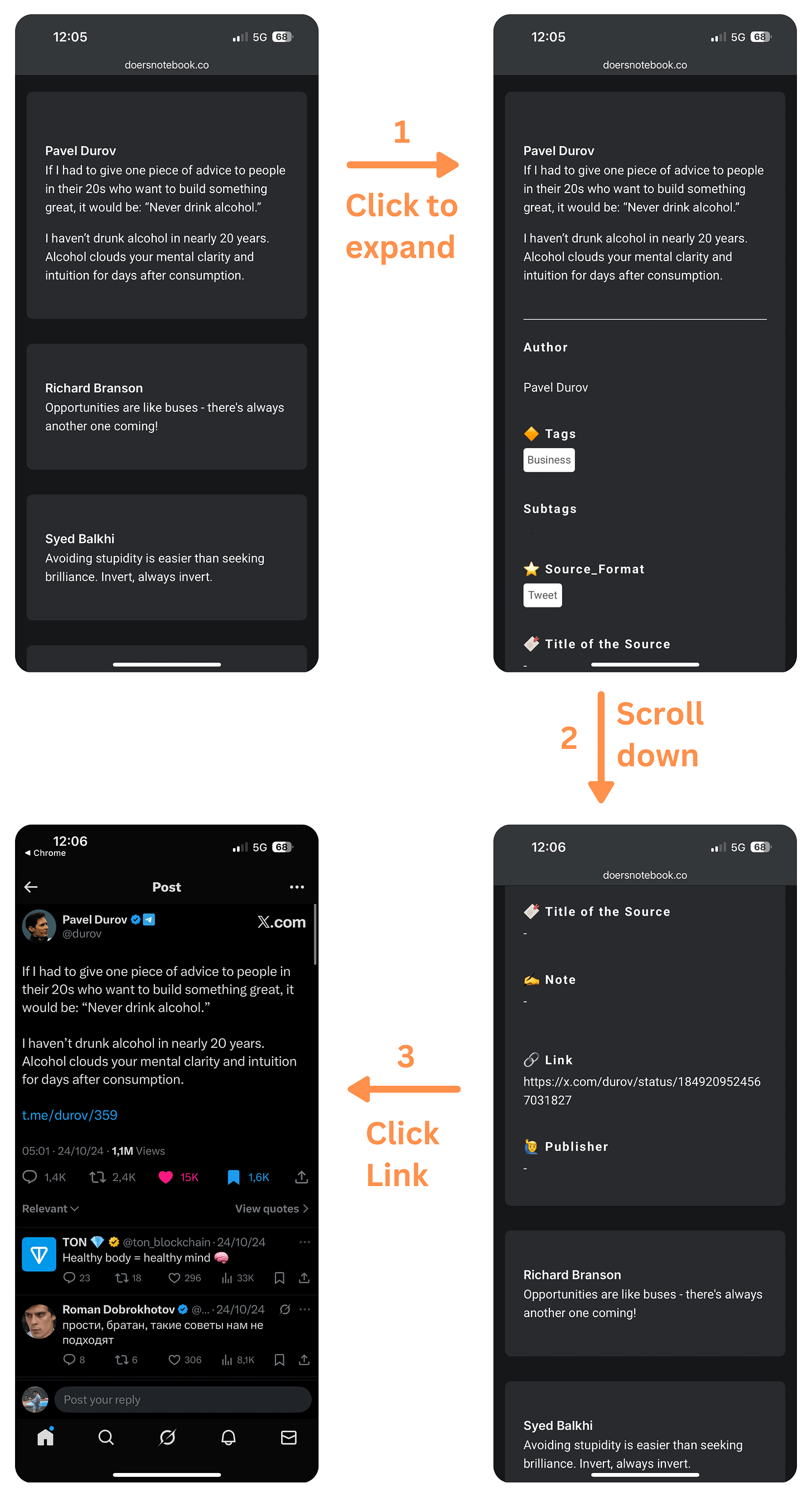
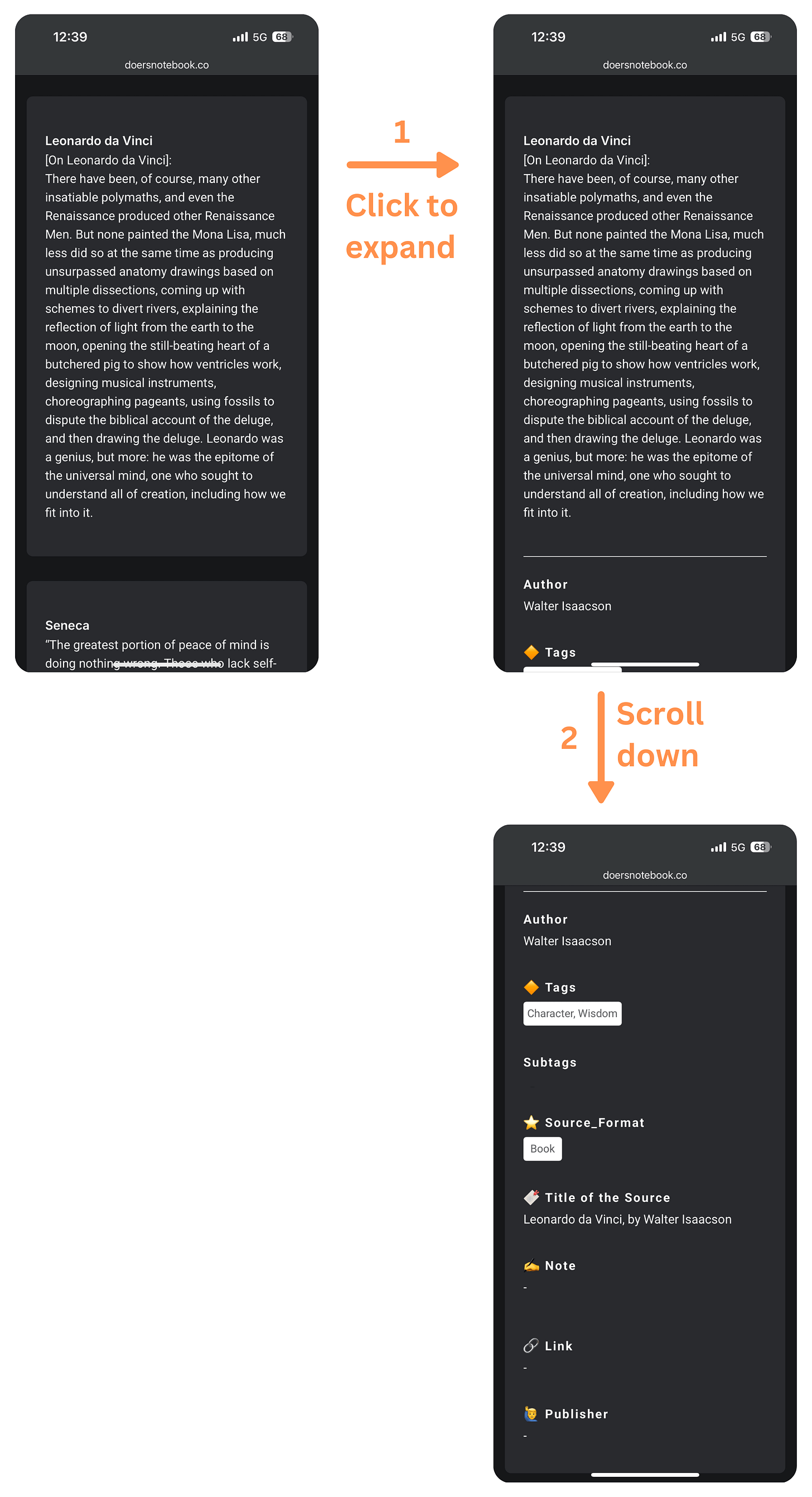
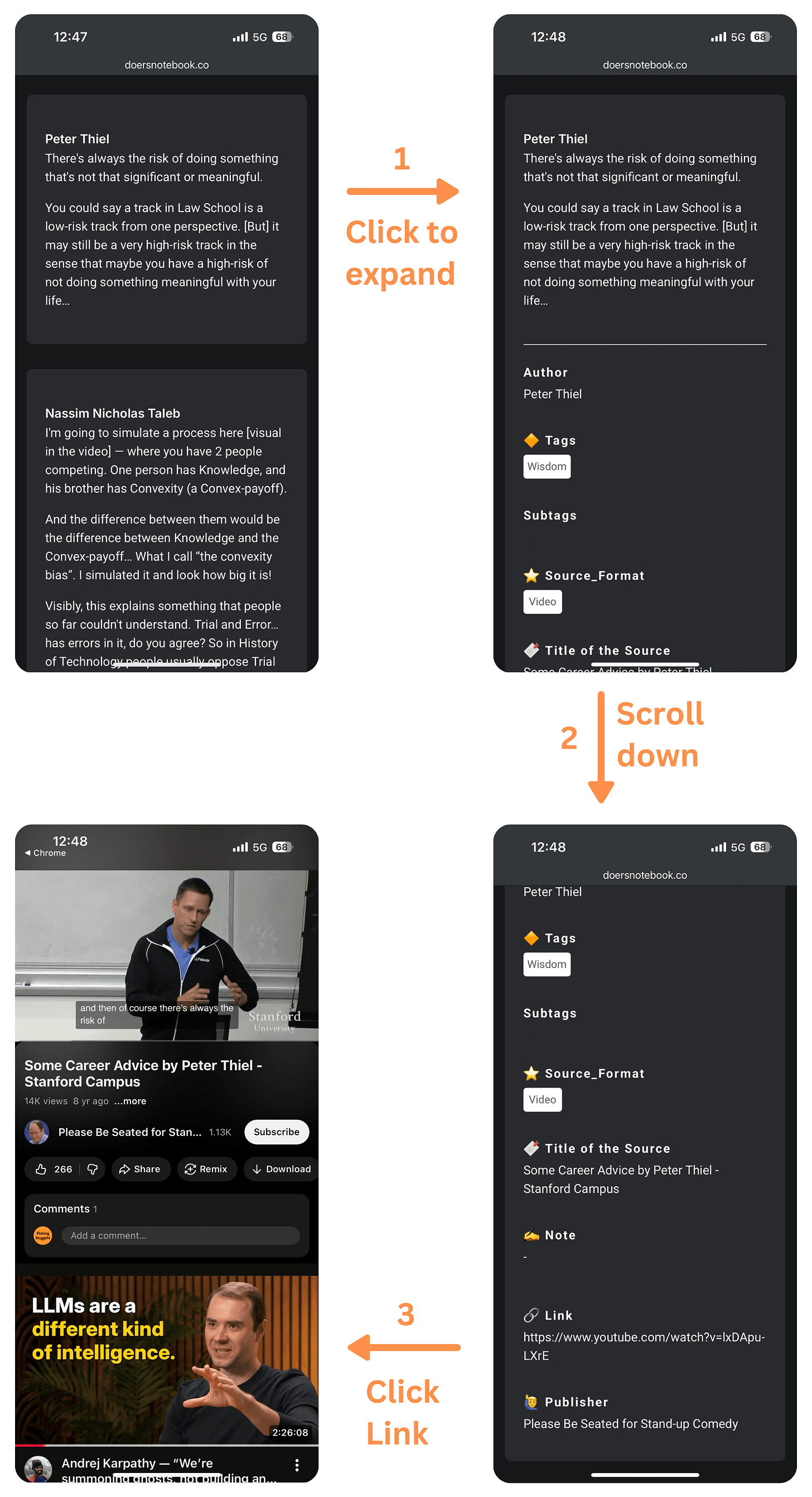
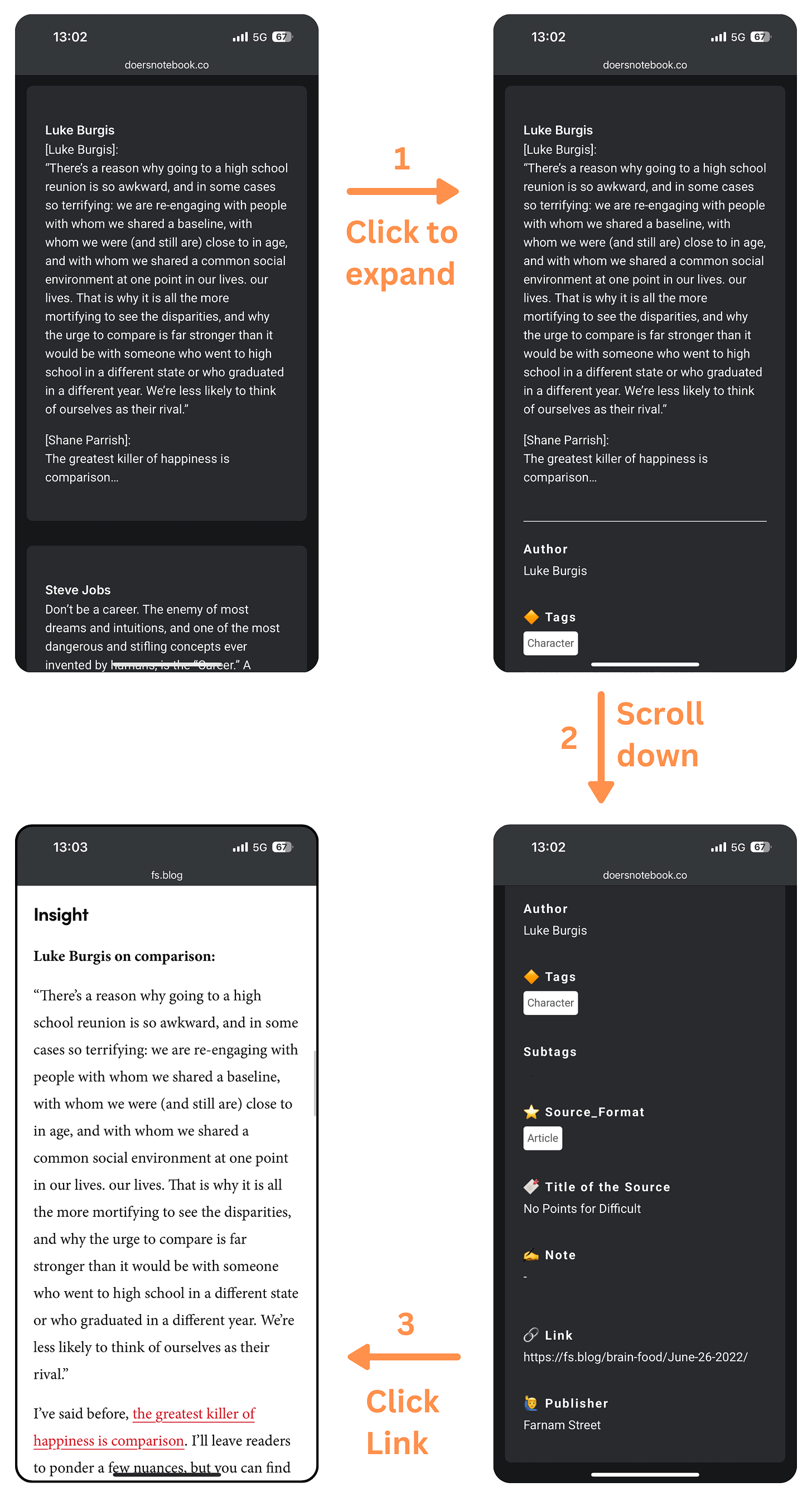
The feed automatically reshuffles every 15 mins and you can filter by Topic (Wisdom, Character, Business, Sales & Distribution, Investing, Content Creation, Psychology, Health) and Source (Tweet, Book, Video, Article).
Filtering by “Tweet”…
It shows all the timeless tweets I’ve bookmarked and saved.

Filtering by “Book”…
It shows all the timeless passages I’ve highlighted on books.

Filtering by “Video”…
It shows all the nuggets I’ve picked from interviews and podcasts. I’ve also manually edited the transcriptions to make it easy to read!

Filtering by “Article”…
It shows nuggets from articles, blog posts, and essays I’ve read.

Besides, access to the backend searchable database is also included! Which is very helpful to get new perspectives on different issues. For instance, if I’m unsure about how to get more sales in my business, I can simply type the word “sales” and immediately get 126 insights relevant to sales! In this case from Jim Edwards, Peter Thiel, Naval Ravikant, Paul Graham, Sam Altman, Balaji Srinivasan, Nassim Taleb, and many other remarkable individuals.

It’s like having a second brain 🧠 from which we can pull wisdom on demand, to help us significantly decrease the error rate in our judgment and also get new perspectives on how to solve problems.
“In an age of infinite leverage [code and media], judgment is the most important skill.”
- Naval Ravikant
“A change of perspective is worth 80 IQ points.”
- Alan Kay
If you want to see the searchable database and Nuggets Feed in action, I made a screen record!
I also made a free version of Nuggets Feed (featuring 1,000 nuggets) - doersnotebook.com/nuggets
You can also go directly to doersnotebook.com (or click the button below)
💥 Stuff I Loved

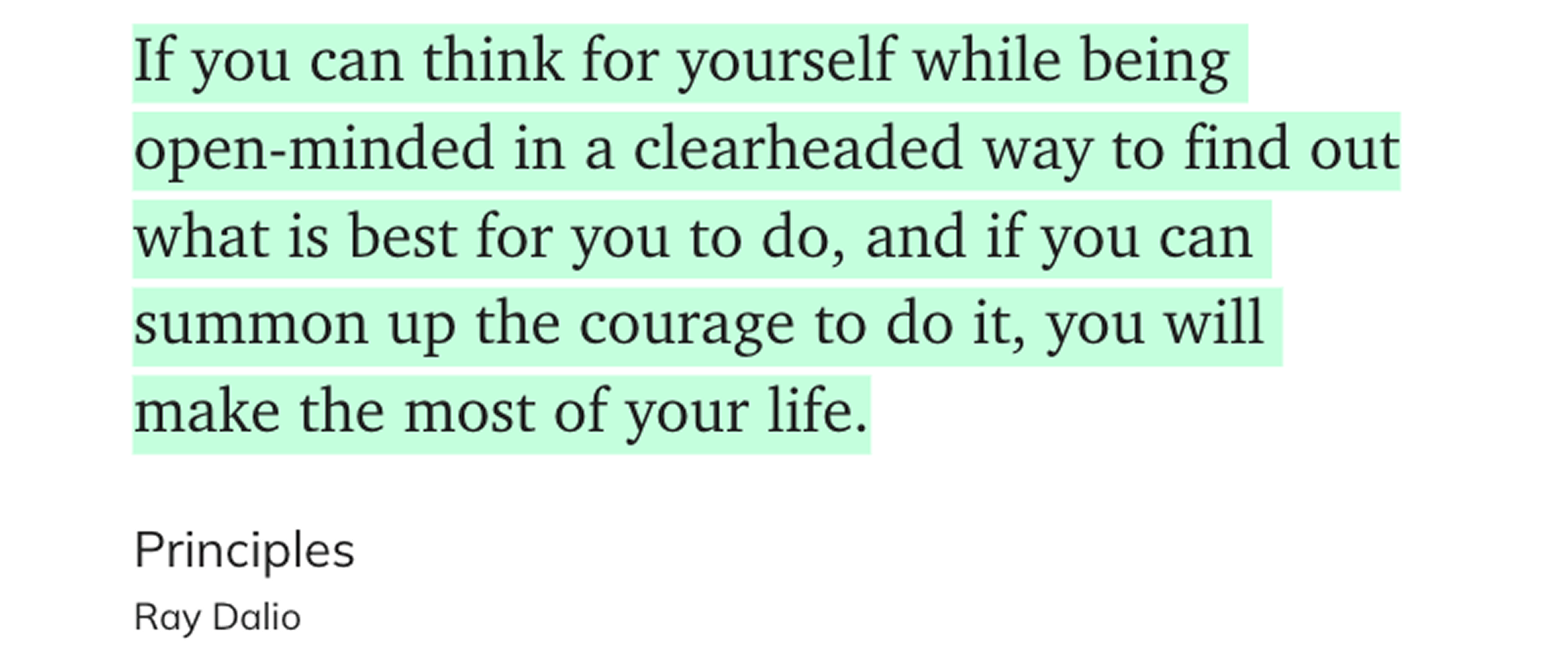
(Resurfaced using Readwise)

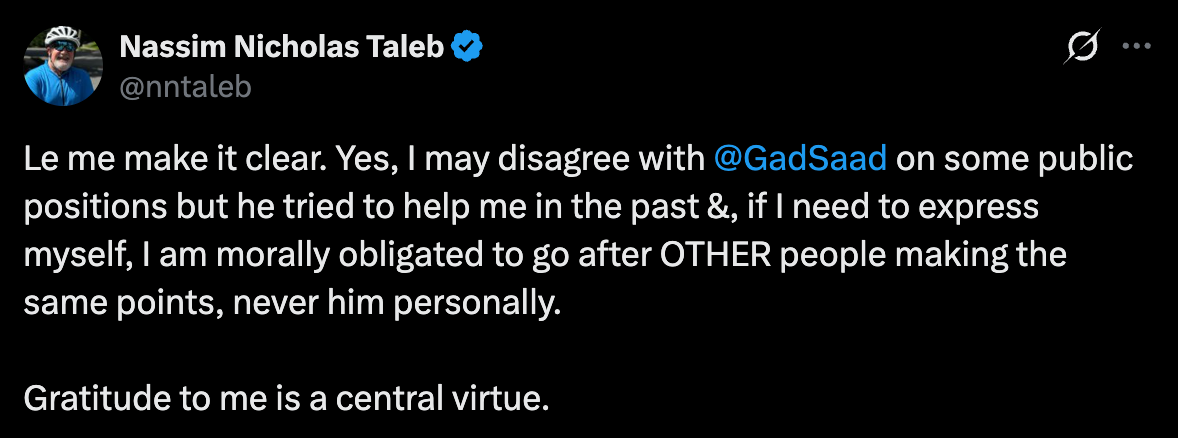
Great example of gratitude…

Amazing interview! So many great ideas from Mohnish.

The life and work of Simone Weil is not only insightful, but also inspiring.
I hope you enjoyed today’s letter!
And I wish you a great 2026!! 🎉🎉🎉
Talk you soon,
Your nuggets friend Julio :)